Nullum Crimen Nulla Poena Sine Lege

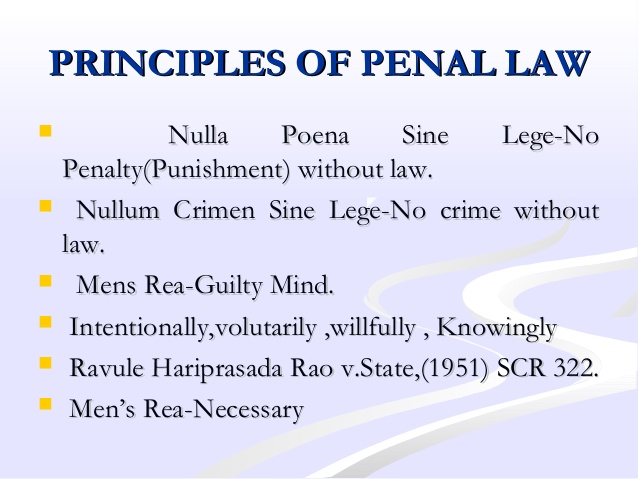
Nullum crimen nulla poena sine lege is a foundational legal principle that guarantees no one can be punished for an act that was not defined as a crime at the time it was committed. This centuries-old maxim safeguards individual freedom by ensuring that criminal liability and its associated penalties are strictly grounded in clear, pre existing legislation.
Historical Origins and Classical Expression of Nullum Crimen Nulla Poena Sine Lege
The concept of nullum crimen nulla poena sine lege traces its lineage to Roman law, where it functioned as a basic safeguard against arbitrary state power. Over time, it was refined in canon law and later absorbed into continental European legal thought, eventually becoming a pillar of modern constitutional democracies. The Latin phrasing itself, meaning "there is no crime and no punishment without law," encapsulates the idea that the state cannot invent offenses or penalties after the fact.
Enshrined in many national constitutions and international human rights instruments, this principle operates as a shield for citizens. It ensures that individuals can regulate their conduct by accessing enacted laws before acting, rather than facing retrospective condemnation. By anchoring legality in published statutes and formal codes, nullum crimen nulla poena sine lege reinforces the rule of law and limits discretionary punishment.

The Three Core Requirements of Legality in Criminal Law
For the principle to be effective, three interconnected requirements must be satisfied, often referred to as the tripartite formulation of legality. First, nullum crimen demands that the conduct in question must be explicitly defined as a crime by competent legislative authority. Second, nulla poena emphasizes that there can be no penalty unless the law clearly establishes it beforehand. Third, the law must be prospective in time, prohibiting the application of harsher or newly created rules to past actions.
- Clarity and precision in legal wording so that citizens can understand what is prohibited.
- Absence of retroactivity, ensuring that new laws never punish conduct that was lawful when originally performed.
- Prohibition of analogical extensions, preventing courts from declaring acts criminal by analogy with existing provisions.
Together, these elements operationalize nullum crimen nulla poena sine lege by making legality more than a mere slogan. It becomes a practical test that courts apply when reviewing whether a prosecution or sentence is lawful, thereby protecting individuals from vague or shifting standards.
Prohibition of Retroactivity and Its Role in Protecting Rights
One of the most vital aspects of nullum crimen nulla poena sine lege is its categorical rejection of retroactive criminal laws. When a state enacts a new rule that criminalizes an act already performed, it undermines predictability and fairness. Individuals shape their behavior based on the legal landscape existing at the time, and changing that landscape afterward can feel like a breach of trust.

International human rights frameworks consistently underscore that the principle extends beyond mere criminal statutes to include procedural and evidentiary rules. In practice, this means that even if a new law reduces a penalty or decriminalizes certain conduct, it generally may not be applied to past conduct in a manner that aggravates the legal consequences. The enduring message of nullum crimen nulla poena sine lege is that the citizen must be able to foresee the legal consequences of conduct at the moment of action.
Distinguishing Nullum Crimen Nulla Poena Sine Lege from Related Legal Concepts
While closely related to principles such as due process and proportionality, nullum crimen nulla poena sine lege focuses specifically on the legislative dimension of criminal law. Due process, for example, addresses the fairness of procedures used to enforce laws, whereas legality concerns whether the law itself is sufficiently clear and publicly accessible before conduct occurs.
Moreover, the principle differs from doctrines like actus reus and mens rea, which deal with the elements of a specific offense. Instead, nullum crimen nulla poena sine lege operates at a higher level of abstraction, setting the boundary conditions for what can be criminalized at all. Understanding this distinction helps clarify why legal systems often treat violations of legality as grounds for invalidating convictions, even when the trial itself was procedurally sound.
Contemporary Challenges and Interpretive Debates
In modern legal systems, debates about nullum crimen nulla poena sine lege frequently arise in areas shaped by complex regulations and delegated legislation. Some argue that the sheer volume of administrative rules can obscure the classical requirement of clear statutory definition. Courts, therefore, must carefully distinguish between primary legislation that establishes crimes and secondary rules that merely specify enforcement details.
Technological change also tests the principle, as novel activities such as certain forms of cyber conduct emerge. Legislatures may respond with broad frameworks, but the core mandate of nullum crimen nulla poena sine lege persists: any new offense must be defined with sufficient precision, and penalties must be established through accessible, pre existing law. Ongoing jurisprudence continues to refine how this balance between regulatory flexibility and legal certainty is achieved.
Conclusion Affirming the Enduring Value of Nullum Crimen Nulla Poena Sine Lege
Nullum crimen nulla poena sine lege remains a vital safeguard that aligns state power with individual liberty. By insisting that crimes and punishments be clearly prescribed in advance, it reinforces predictability, fairness, and public trust in the legal order. As societies evolve, this principle continues to serve as a benchmark for evaluating the legitimacy of criminal laws and their application.

NULLUN CRIMEN NULLA POENA SINE LEGE - Prof. Vinícius reis
... no crime no apoena se negue este brocardo latino é obrigatório para você é o que diz num crime nulla poena sine leg no crime ...
