Res Cogitans E Res Extensa

In the philosophy of mind, few distinctions are as foundational as res cogitans e res extensa, the radical separation between thinking substance and extended substance introduced by René Descartes.
The Meaning of Res Cogitans and Res Extensa
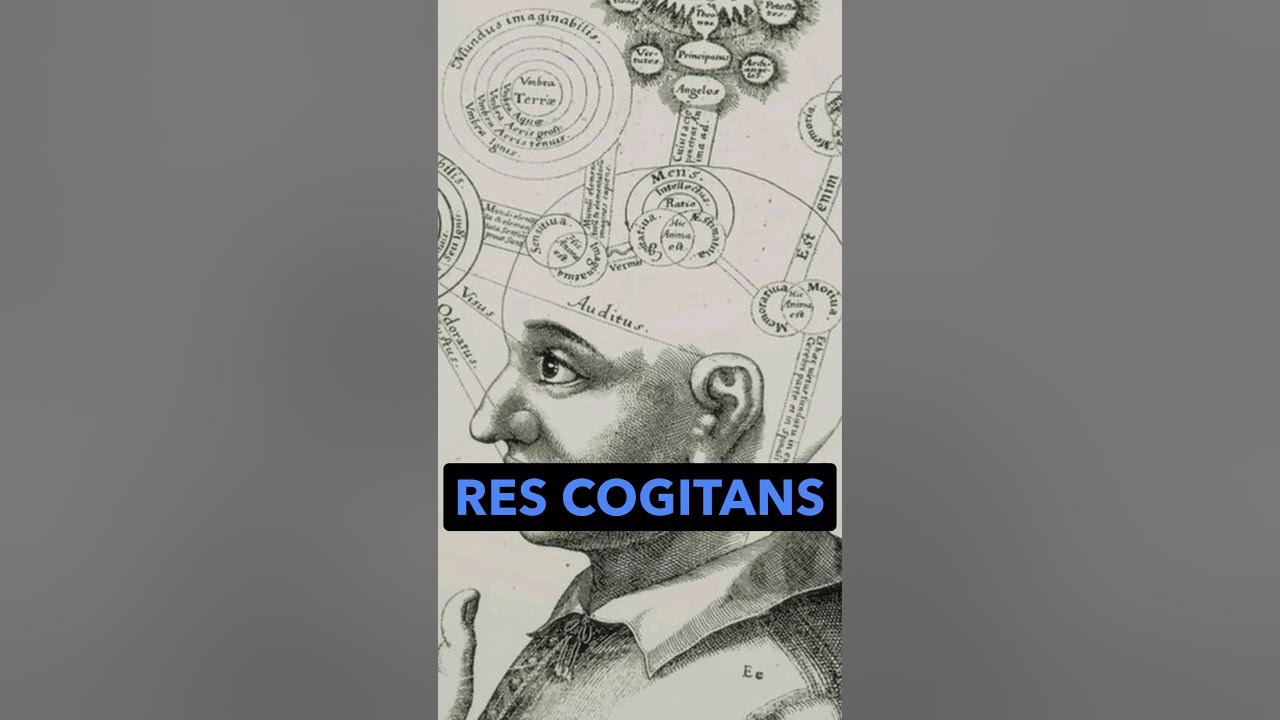
The Latin phrase res cogitans e res extensa names two kinds of reality according to Descartes: the thinking thing and the extended thing. Res cogitans refers to mind, consciousness, and the self as a substance whose essence is to think, to doubt, to understand, and to will. Res extensa, by contrast, designates matter, space, and everything that occupies extension, possessing the essence of figure, motion, and measurable quantity.
For Descartes, these two realities are as distinct as thought and extension are different in nature. He frames the distinction as a real and necessary metaphysical cleavage, arguing that we can clearly and distinctly perceive mind as immaterial and body as material, even though they interact in human experience. This sharp boundary between res cogitans and res extensa becomes a cornerstone of his rationalist metaphysics, shaping later debates about substance, identity, and the possibility of knowledge.

Key Characteristics of Each Substance
Res cogitans is characterized by thought, self-awareness, and the capacity for judgment, independent of any bodily location. It is indivisible, simple, and intimately known through introspection. Res extensa is characterized by spatial magnitude, divisibility, and mechanical causality, explainable through mathematics and physics. The table below summarizes their core attributes.
- Res cogitans: thinking, unextended, non-spatial, conscious
- Res extensa: extended, measurable, located in space, non-thinking
- Interaction occurs at the pineal gland in Descartes’ model
The Historical Context of the Distinction
Descartes introduces the contrast between res cogitans e res extensa in the Meditations on First Philosophy, using methodological doubt to arrive at the indubitable existence of the thinking self. By doubting the senses and the external world, he arrives at the cogito—cogito, ergo sum—as the first principle of his philosophy. From this foundation, he reconstructs reality as composed of two fundamental substances, one mental and one material, thereby laying the groundwork for modern philosophy of mind.
This distinction responds to earlier scholastic frameworks that treated qualities like thought and extension as accidents of a single substance. Descartes’ move renders mind and body separate domains, which allows natural science to describe the material world mathematically while preserving subjective experience and free will. The historical significance lies in how this separation shapes the trajectory of epistemology, physics, and debates about consciousness that continue to this day.
Influences and Predecessors
While Descartes’ formulation is novel, he draws on earlier traditions, including Augustine’s introspective certainty and medieval discussions about substance and accident. At the same time, his clear and distinct ideas anticipate developments in mathematics and the scientific revolution, aligning thought with a mechanistic picture of nature. The res cogitans e res extensa contrast thus represents both a rupture and a continuation within Western metaphysics.
Implications for Mind-Body Interaction
The most pressing problem raised by Descartes’ dualism is how an immaterial mind can causally interact with an extended body. If mind has no spatial location, it seems physically impossible for volitions to move limbs and for bodily sensations to inform thought. Descartes appeals to the pineal gland as a point of contact, yet this explanation only pushes the mystery deeper, prompting later philosophers to seek alternative accounts of interaction or to deny the reality of one side of the distinction.
Critics argue that the very coherence of mind-body interaction depends on a shared spatiotemporal framework, which the res cogitans e res extensa distinction undermines. Some respond by redefining interaction in non-mechanical terms, while others abandon substance dualism altogether in favor of monistic or property-based theories. The enduring fascination with this problem testifies to the depth of Descartes’ original insight.

- Interactionist dualism: mind and body causally influence each other
- Epiphenomenalism: mental states are byproducts with no causal power
- Parallelism: mental and physical events run in coordinated series without interaction
Res Cogitans and Modern Philosophy of Mind
Contemporary debates about consciousness frequently invoke the legacy of res cogitans e res extensa, even when philosophers reject Descartes’ specific metaphysics. Physicalists argue that mental states are identical to brain states, attempting to dissolve the apparent gap between thought and extension. Others develop non-reductive frameworks that preserve the subjective character of experience while acknowledging its natural basis. The contrast between thinking and extended substance continues to structure how we pose the hard problem of consciousness.
In philosophy of cognitive science, the legacy of the cogitative substance shapes questions about intentionality, phenomenal qualities, and the limits of formal modeling. By keeping the distinction between res cogitans and res extensa alive in critical discussion, modern thinkers inherit a powerful vocabulary for articulating the stakes of explaining mind in natural terms.
Contemporary Reinterpretations
Some scholars translate the Cartesian vocabulary into functional or informational terms, speaking of mental states as representational or computational without invoking substantial dualism. Others emphasize the first-person perspective of res cogitans as a datum that any adequate theory must accommodate, even while rejecting metaphysical dualism. These approaches show how the core intuition—there is something it is like to be a thinker—remains influential.
Criticisms and Alternative Frameworks
Many philosophers challenge the coherence of substance dualism, arguing that the very notion of a wholly immaterial substance is obscure and that the interaction problem is insurmountable. Empiricist traditions emphasize that all knowledge derives from sensory experience in extended space, casting doubt on the idea of a thinking substance known by pure introspection. Materialist and naturalist programs seek to explain thought entirely within the framework of res extensa, using neuroscience and psychology to replace dualistic explanations.
Process philosophies, neutral monism, and embodied cognitive theories offer alternatives that blur the strict boundary between thinking and extended reality. On these views, mind and body are not separate substances but aspects of more fundamental processes or organizational structures. Such frameworks aim to preserve the phenomenological reality of thought while avoiding the metaphysical difficulties of Cartesian dualism.
- Materialism reduces mental states to physical states
- Panpsychism attributes proto-mental features to basic matter
- Embodied cognition ties thought to bodily interaction with the environment
The Enduring Significance of Res Cogitans e Res Extensa
Despite widespread criticism, the distinction between res cogitans e res extensa remains a touchstone in philosophy because it crystallizes deep intuitions about thought, perception, and the structure of reality. It highlights the apparent gap between subjective experience and objective description, a gap that science has not yet fully closed. By formulating this divide with such clarity, Descartes set the terms for much of what follows in epistemology and philosophy of mind.

Engaging with the legacy of res cogitans e res extensa encourages us to ask what kind of entities minds are, how they relate to bodies, and what explanation would truly satisfy our demand for understanding. Even if future theories move beyond the dualistic framework, the questions Descartes posed in terms of thinking substance and extended substance will continue to shape our search for a comprehensive account of mind and world.
Dualismo Cartesiano (res extensa e res cogitans):
O Dualismo Cartesiano é um conceito de enorme importância na filosofia de René Descartes e é também um dos principais ...
